Person-Centered Education in a Time of Artificial Intelligence
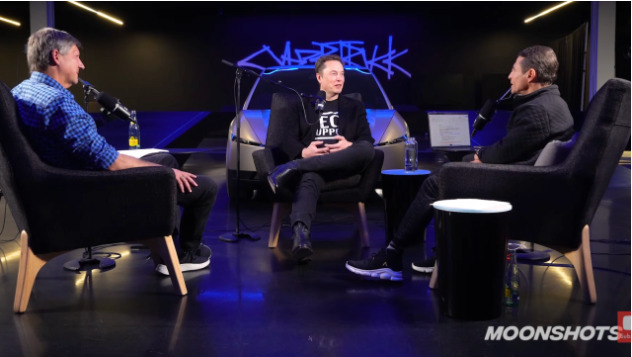
I love the Moonshots podcast with Peter Diamandis and (gasp) generally agree with Elon Musk, but I listened to Episode 220 over the weekend ("Elon Musk on AGI, Abundance, and the Future of Humanity") and here's the thing: Musk may be right about rockets but he's wrong about education.
"Anything that involves information and anything short of shaping atoms, AI can do probably half or more of those jobs right now—that includes education." — Elon Musk
I understand what he means. He's lumping teaching in with coding, data analysis, word processing... knowledge-work. If the work is digital and deliverable, AI can deliver it. But teaching isn't like coding. It's more like plumbing. Messy, physical, and slow. You have to show up, get your hands dirty, and deal with clogged drains.
What's more, and more important, most of the boys in the billionaire bro band are making the same mistake. Marc Andreessen has been saying for years that education is "next up for fundamental software-based transformation." Sam Altman calls education "most ripe for innovation"—which, of course, is code for automation—and predicts that "30 to 40 percent of the tasks that happen in the economy today get done by AI in the not very distant future." Bill Gates calls this the dawn of "free intelligence," imagining "virtual tutors personalizing lessons for every student, 24/7" and suggests that "teachers could focus on mentorship as AI tutors drill algebra."
They're all making the same mistake: they think teaching is primarily about information delivery. It's not.
I used to teach 8th grade. My job title was Teacher of English and History, but really, I joked, I taught history and hormones, civics and sitting still, literature and listening. The information was the easy part. The hard part was getting a room full of thirteen-year-olds to care about something other than pimples, periods, or penises. In college it's not so different, and that's not all bad... it's still about self-actualization, about learning who you are and what matters. That's the work.
By Musk's own distinction, good teaching is closer to rocket engineering than to ChatGPT. Actually, it's more like cooking than coding. It's reading faces in real time, adjusting to the room, building trust over months so a kid will tell you what's actually going on. The social physics of a room full of developing humans.
The technofuturists are brilliant, but they hated school and learned in spite of their teachers, not because of them. And perhaps their emotional illiteracy explains why they think education can be solved with better software.
Everyone's panicking about jobs—will AI replace teachers?—but I see it differently. This is a moment to clarify our value and our values. We teach in classrooms and hold seminars and insist on presence for reasons. Education was never primarily about information transfer... it's about identity formation and transformation, the kind that only happens among people struggling together toward understanding. Or just struggling together to become better humans.
Near the end of the podcast, Musk asks Grok for reasons to be optimistic. The AI responds: "The future's going to be pure magic, you know... exploring galaxies hand in hand." I thought: give me a break. Life is suffering and challenge, redemption and hope, thriving in the face of entropy and death. Friction is not the bug... it's the curriculum. No AI is going to hold our hand through the death of our parents, or at the births of our children.
You can't optimize a human life. You can only show up for it.
Education is encounter
Tools that train capacity without replacing the human work of becoming.
Explore Academic Velocity